
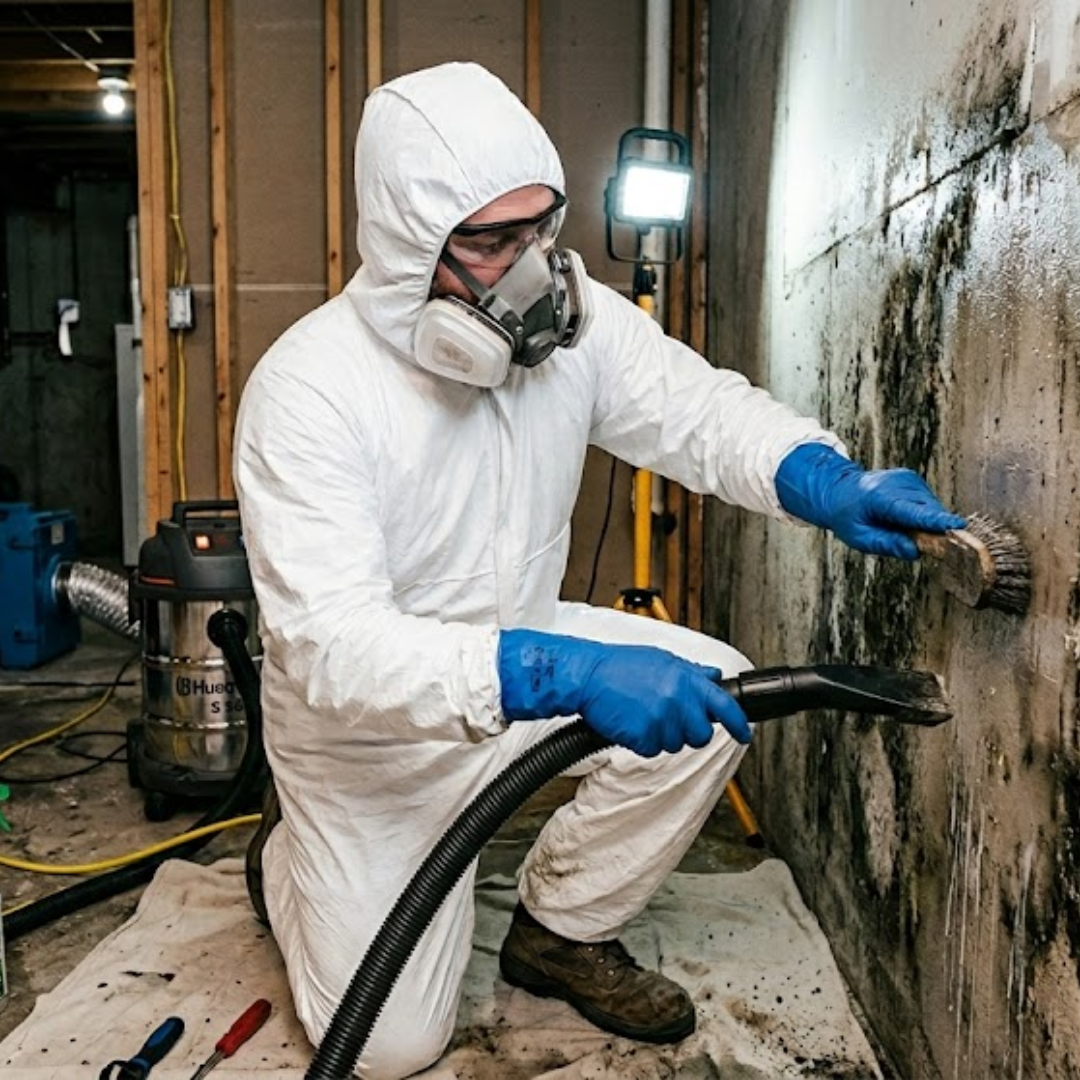
Most people don’t think about timing until they’re already dealing with the problem. There’s a smell they can’t place. A stain that keeps coming back. Maybe a recent leak that never fully dried out. That’s when the question shows up: how long does a mold home inspection really take?
The short answer is a couple of hours. The honest answer is, it depends, and sometimes more than you’d expect.
At Walker’s Home Inspections, we don’t rush through properties just to check a box. Mold isn’t always visible, and the time it takes to find it depends on how well it’s hiding.
What’s Actually Happening During the Inspection
A proper mold home inspection isn’t just about spotting discoloration on a wall. That’s the obvious part. The real work is tracing moisture, because mold follows water, every time.
We move through the home with that in mind:
- Where has water been?
- Where could it be trapped?
- What’s feeding the growth?
That means looking beyond surfaces, into corners, behind systems, and around ventilation paths. Sometimes the issue is right there in plain sight. Other times, it’s buried in a place no one thinks to check.
The Typical Time Range
For a standard property with no major complications, a mold home inspection usually takes between one and three hours.
Smaller homes with a clearly defined issue tend to move faster. If the concern is limited to one area, a bathroom ceiling, for instance, the process is fairly contained.
But that’s the clean version of the story. Real homes are rarely that simple.
What Makes an Inspection Take Longer
Size matters, but not how you think
Yes, bigger homes take more time. More rooms, more surfaces, more systems. That part’s obvious.
What people underestimate is how layout affects the process. A compact home with tight access points can take longer than a larger, open one. Crawlspaces, attic entries, awkward corners, these slow everything down.
Moisture tells the real story
Mold is just the symptom. Moisture is the cause.
If we find active dampness or signs of past water damage, we don’t stop at the surface. We follow it. That might mean checking adjacent walls, floors, or ventilation systems.
This is where a quick mold home inspection turns into a deeper investigation. And it should. Because if the moisture source isn’t identified, the mold comes back. It always does.
That’s also where future mold remediation services come into the picture. Without a clear understanding of the source, remediation is just temporary cleanup.
Hidden spaces slow everything down
Mold has a habit of settling into places people forget exist.
Behind drywall. Inside insulation. Underflooring. Inside HVAC pathways.
Accessing these areas carefully, without causing unnecessary damage, takes time. And skipping them isn’t really an option if you want a complete picture.
At Walker’s Home Inspections, we’d rather take longer and be certain than move fast and miss something that matters.
The extent of the problem
If mold shows up in multiple areas, the inspection naturally expands.
Now it’s not just about confirming presence, it’s about mapping spread. Understanding how far it’s gone. Identifying whether different areas are connected or separate issues.
That level of detail is what shapes the next step, whether that’s targeted cleanup or full mold remediation services.
When testing becomes necessary
Not every situation calls for testing, but when it does, it adds another layer.
Air sampling or surface analysis helps confirm what’s present and how concentrated it is. The collection itself doesn’t take long, but interpreting results and tying them back to the property does.
It’s not about adding time, it’s about removing doubt.
The Bottom Line
A mold home inspection usually takes a few hours. But the real timeline depends on what the property reveals once you start looking closely.
At Walker’s Home Inspections, we don’t treat inspections as routine. Each one is a process of uncovering what’s actually going on, no shortcuts, no assumptions.
Because in the end, it’s not about how fast the inspection is done. It’s about whether it’s done right.
And if that leads you toward professional mold remediation services or a reliable mold removal company in Tehama County, you’ll be making that decision with real information.
FAQs
- How long does a mold home inspection usually take?
Most mold home inspection jobs take one to three hours, depending on property size, conditions, and the need for mold remediation services.
- What affects the duration of a mold home inspection?
Size, moisture levels, hidden areas, and severity of mold issues all impact mold home inspection time and potential mold remediation services needed.
- Do I need a mold removal company in Tehama County after inspection?
Not always, but serious findings from a mold home inspection may require a mold removal company in Tehama County for proper remediation.
- Is mold testing included in every mold home inspection?
Not always, but testing may be recommended during a mold home inspection to confirm contamination before starting mold remediation services.
- Can a mold home inspection detect hidden mold problems?
Yes, a thorough mold home inspection can identify hidden issues and guide whether mold remediation services or a mold removal company in Tehama County is needed.
Instant Casino Live Chat
References: Instant casino kontakt Instant Casino Login Probleme (https://code.wxk8.com/roxanaoswalt00)